
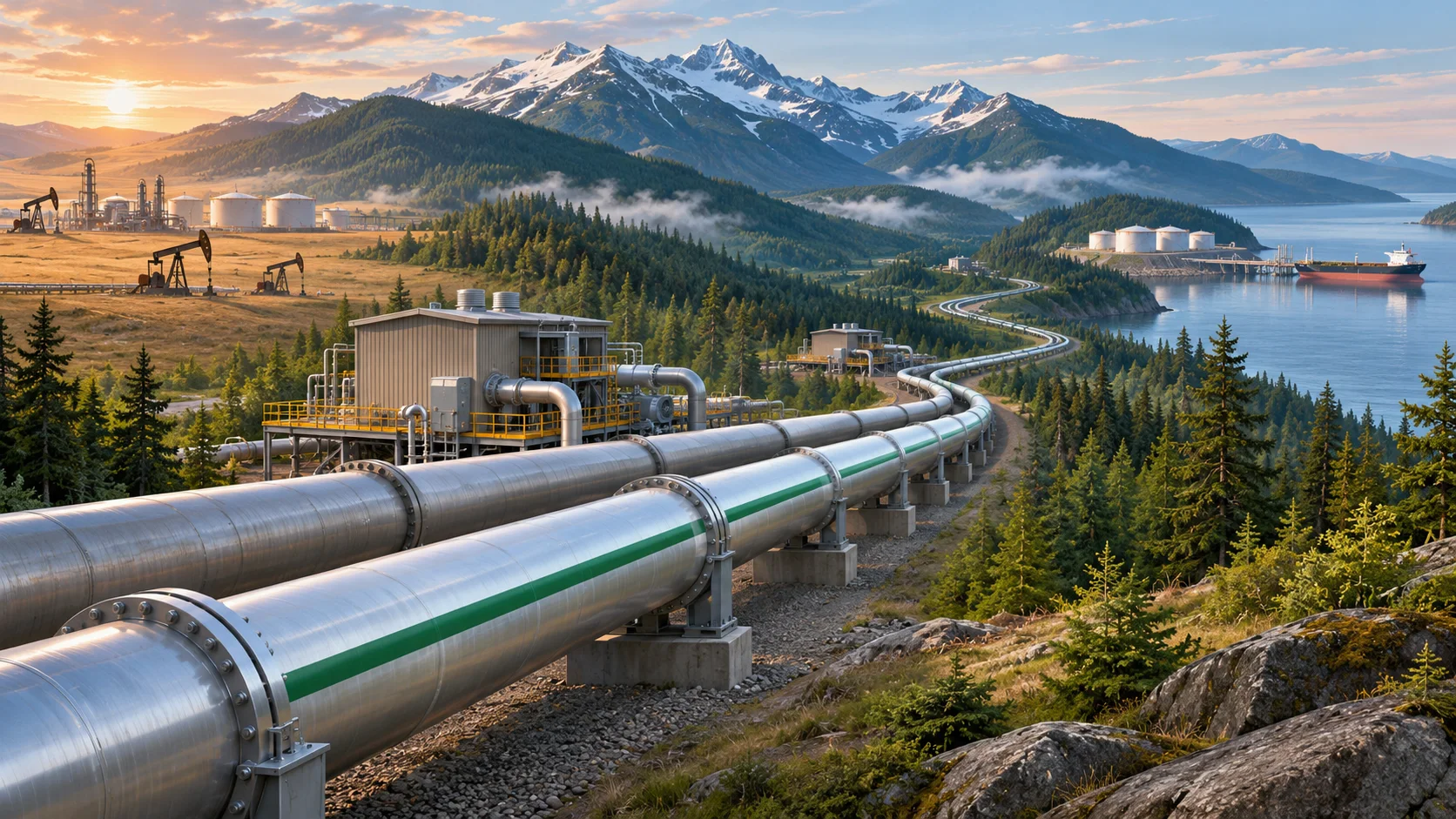
Canada’s Trans Mountain expects to begin testing commercial demand by early January for a proposed expansion that would add about 210,000 barrels per day of pipeline capacity.
Chief executive Mark Maki said the planned open season would determine whether shippers are willing to commit to the Mainline Optimization Project, Reuters reported after an interview on Friday.
Project would add pipe and pump stations
The proposed project includes about 30 kilometres of new pipeline in British Columbia and 11 new pump stations along the existing system, as well as upgrades to existing facilities.
Trans Mountain’s project information says the additional pipe would run between the existing Darfield Pump Station north of Kamloops and a new maintenance site near McLure. The company filed a regulatory application for the project in August.
Trans Mountain is targeting April 2027 for a final investment decision, with completion planned for late 2028. Those dates remain subject to commercial commitments, regulatory decisions, construction conditions and other project risks.
Capacity could reach 1.19 million barrels per day
The government-owned pipeline currently has nominal capacity of about 890,000 barrels per day between Alberta and Canada’s Pacific coast. A separate drag-reducing-agent project can add up to 90,000 barrels per day, depending on demand.
If the 90,000-barrel and 210,000-barrel optimization projects proceed as planned, the system’s nominal capacity could rise to as much as 1.19 million barrels per day. Trans Mountain presents that total as a prospective maximum, not current operating throughput.
The Mainline Optimization Project is intended to use much of the existing corridor and terminal network rather than build another entirely new route. Rising Canadian oil-sands production has increased interest in access to the Pacific coast and overseas markets.
The existing expansion entered service in 2024 after costing C$34 billion and tripled Trans Mountain’s capacity to 890,000 barrels per day. The planned open season will be an important test of whether producers are prepared to support another increase through long-term shipping commitments.